The Chart Room
Over the years, James has developed and refined a vast library of resources to help paddlers of all levels navigate the complexities of the sea. These tools were born from years of experience on the water – adapted through real-world expeditions, coaching sessions and leadership training. James is now making these resources public, offering them as a free toolkit for the community. Whether you are an individual paddler looking to sharpen your planning skills or a fellow provider seeking reliable materials for your own courses, these guides are here to support safer, more informed exploration of the Cornish coast and beyond.
Useful Websites:
Tidelines: Tidelines – Tidal Planner
Fishing App: Fishing App – GPS Nautical Charts
Met Office – Deep Dive: Met Office – Deep Dive
Atlantic Shore Sea Kayak: Resources and Maps
Dealing with the Wind Resource
This document is a practical guide for sea kayakers on how to manage the wind using the boat’s natural “anchor points”. It explains why kayaks turn into the wind and provides simple techniques like adjusting your skeg, body position and paddle strokes, to help you stay in control while paddling in different directions. The guide also covers efficient ways to turn your boat and how to ferry glide to cross windy areas without being blown off course.

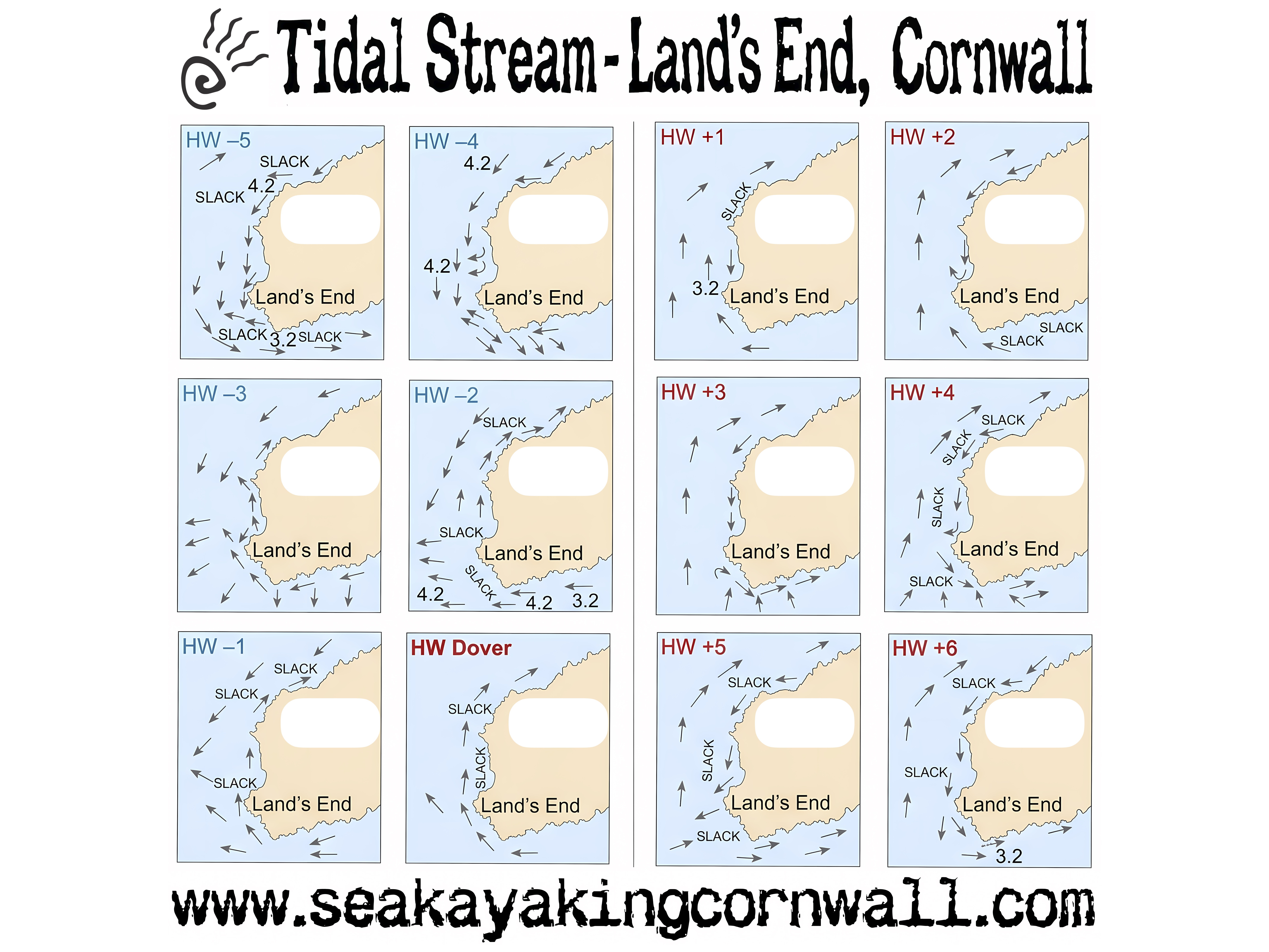
Tidal Stream – Land’s End, Cornwall Tidal Planning Resource
This document is a practical, quick-reference tidal chart for sea kayakers navigating the dynamic waters around Land’s End, Cornwall. It visually maps out the hourly speed and direction of the tidal streams, helping you easily anticipate the water’s flow and identify periods of slack tide. Designed for on-the-water use, the guide includes convenient blank spaces to write in your daily times, making it an essential tool for safe and efficient journey planning.
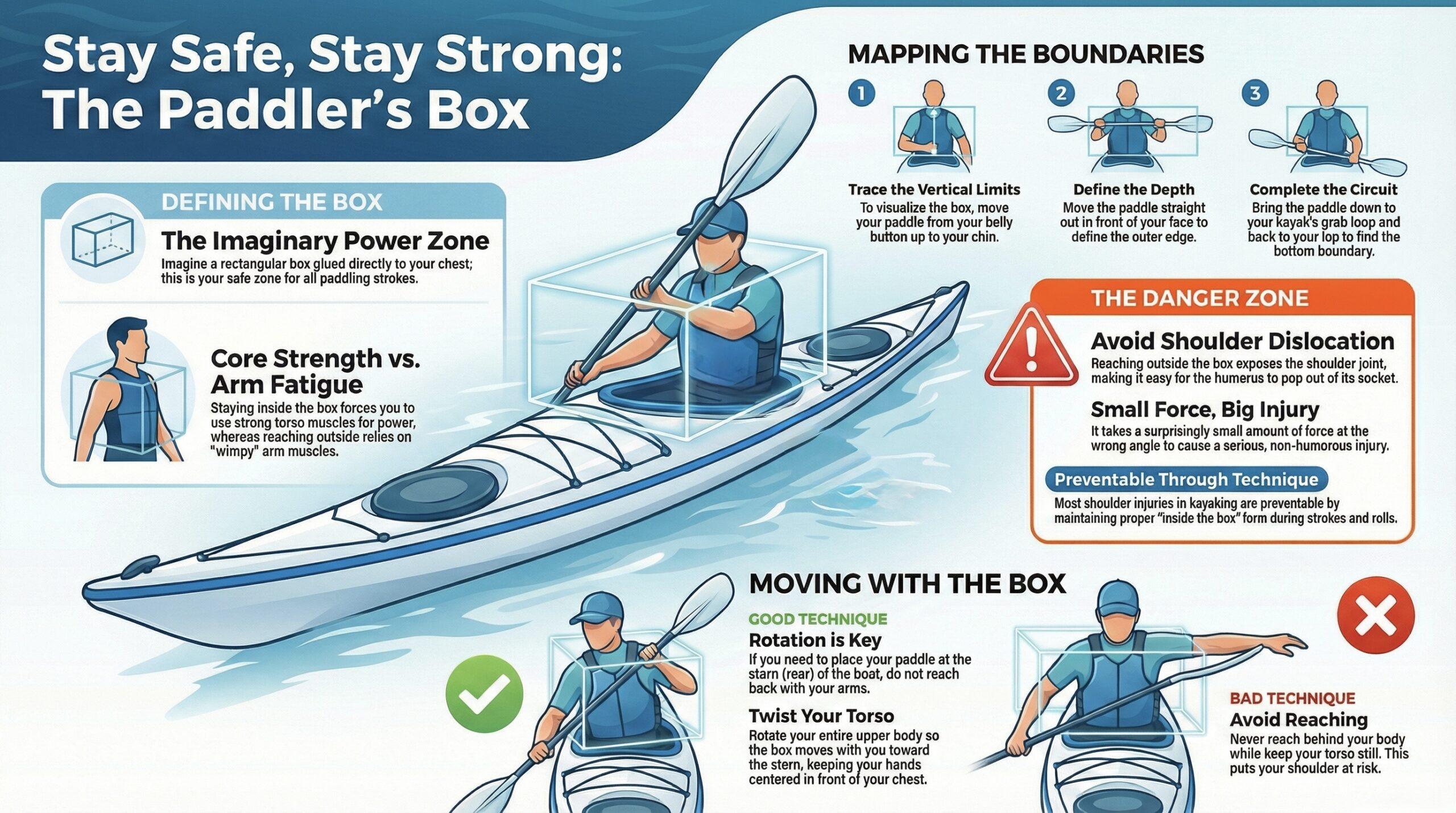
Stay Safe, Stay Strong: The Paddlers Box
This specific illustration is about the “Paddler’s Box,” a fundamental concept in sea kayaking for injury prevention and power transfer. The “Paddler’s Box” is a rectangular space formed by your arms, chest and the paddle. Maintaining this box ensures that your torso does the work rather than just your small shoulder muscles.
Constraints Led Approach Slide Deck
This document explores the Constraints-Led Approach (CLA) to coaching sea kayaking, emphasizing how learning is a result of the interaction between the paddler, the environment and the task. It outlines three primary types of constraints-Individual (e.g., fitness and psychology), Environmental (e.g., wind and tide) and Task (e.g., specific goals or rules)-which coaches can manipulate to encourage athletes to find their own movement solutions.

From Mechanic to Gardener Coaching Presentation
This document presents a shift in coaching philosophy, moving from a “Mechanic” mindset to a “Gardener” mindset. It explores how coaches can better support a paddler’s development by treating them as a complex, living system rather than a machine to be “fixed”.

Coaching Theory Flash Cards
This document is a set of Coaching Theory Cards designed as a quick-reference guide for educators and coaches to understand different learning theories and pedagogical approaches. It distills complex educational psychology into actionable summaries for field use.

Human Factors in Sea Kayaking
This document focuses on Human Factors in sea kayaking, exploring how psychological and social dynamics influence decision-making and safety on the water. It moves beyond technical skills to examine the “why” behind accidents and successful leadership.

Paddling Safely: The Sea Kayakers Guide to the Swiss Cheese Model
This document applies the Swiss Cheese Model to sea kayaking, using the metaphor of stacked slices of cheese to explain how accidents happen and how they can be prevented through multiple “layers” of safety.

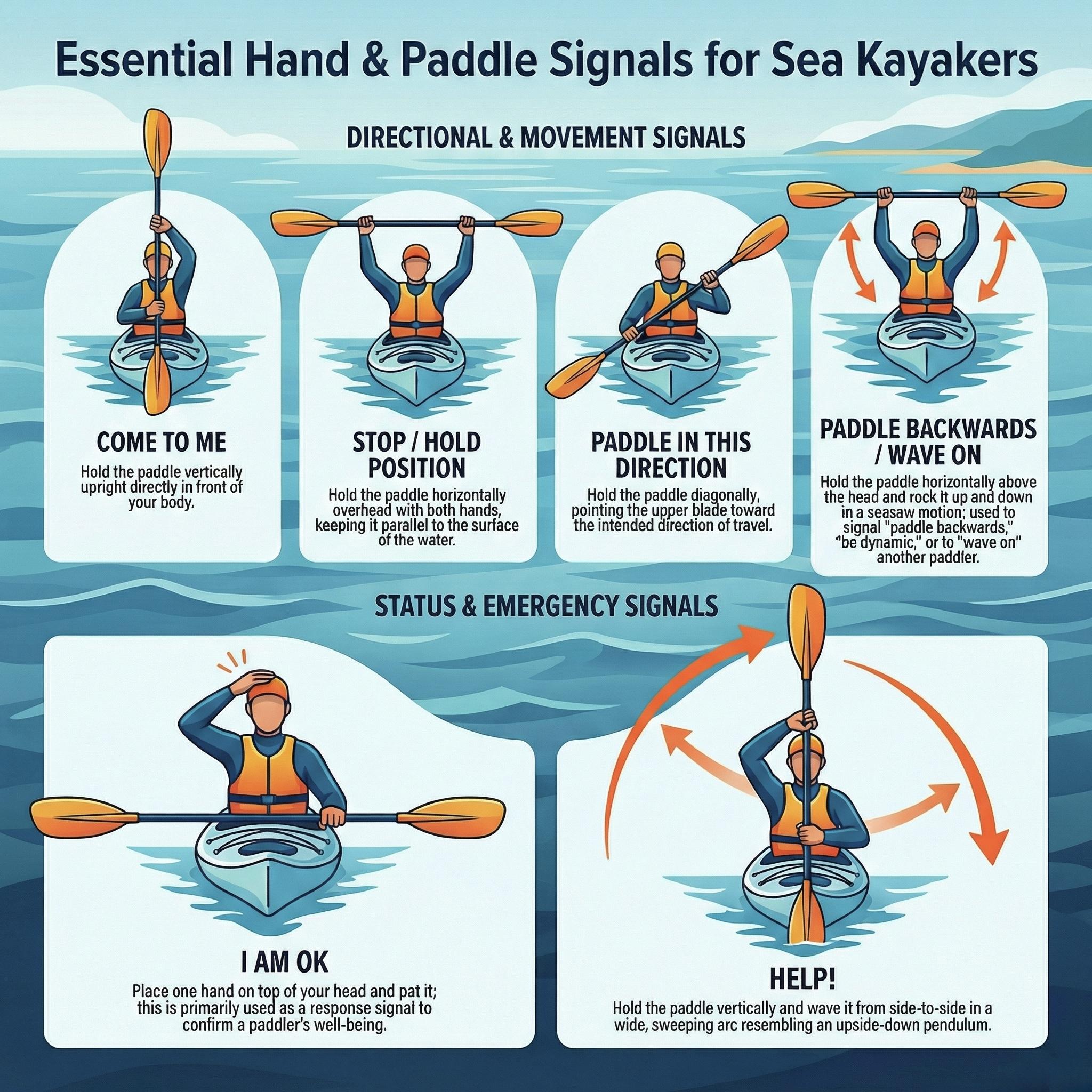
Signs & Signals Illustration
This illustration is a visual guide to Essential Hand & Paddle Signals for sea kayakers, designed for clear communication on the water. It is divided into two main categories: Directional & Movement Signals and Status & Emergency Signals. The guide provides visual instructions for common actions like moving together, stopping, or pointing out a specific direction of travel. It also explains how to confirm a paddler’s well-being with the “I AM OK” head tap and how to signal for “HELP!” by waving a paddle in a wide, vertical arc. Each signal includes a simple diagram and a brief description of the required physical movement to ensure it is easily understood at a distance.
Emergency Contact Cards
This document is a template for an Emergency Contact Card designed for sea kayakers to keep on their person. It contains a section for personal details, medical information and the location of safety gear, alongside step-by-step instructions for using a PLB (Personal Locator Beacon), VHF radio, or mobile phone to call for help. The card is meant to provide rescuers with vital information while guiding the user through distress signal protocols like a “Mayday” call.
As a provider requirement for lone working – I typically fit two of these onto a piece of A4, laminate them and put them somewhere accessible within my kayak.

Trip Plan Card
This document is a Trip Plan Card used by sea kayakers to organise essential safety and environmental data before heading out. It features a detailed hourly log to track changing wind, tide and swell conditions throughout the day, along with dedicated sections for tidal stream information, shore contact details and a planning sketch map. By recording times for high and low water alongside estimated times of departure and arrival, it serves as a central reference for group safety and navigation.

Cornish Wildlife Bingo Sea Kayaker Field Guide
This document is a Cornish Wildlife Bingo Field Guide, designed to help sea kayakers identify local species while encouraging responsible wildlife watching. It gamifies the experience of nature observation by providing a “bingo” grid alongside practical advice for minimising disturbance to coastal animals.

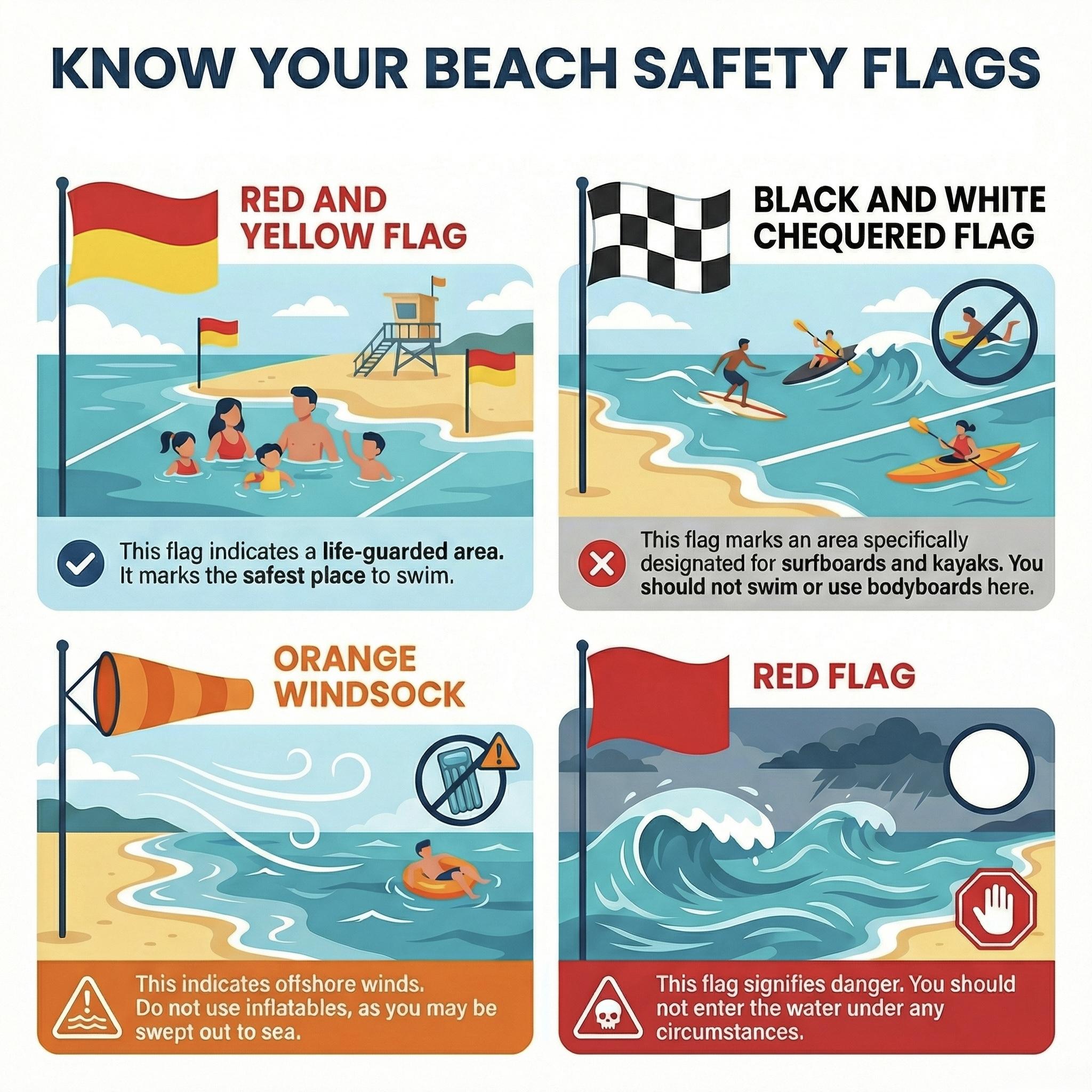
Beach Flags Illustration
This guide illustrates the standard beach safety flags used to communicate water conditions and designated zones to coastal users. It explains the meaning of various markers, from the red and yellow flags that highlight lifeguarded swimming areas to the black and white chequered flags reserved for surfboards and kayaks. The document also features critical warning signs, such as the orange windsock for dangerous offshore winds and the red flag, which indicates that no one should enter the water due to severe danger.