I’ve made a few upgrades to my sea kayak expedition setup this season and have been enjoying the results.
A good night’s sleep makes a huge difference on expedition. Waking up through the night because you’re uncomfortable, shifting around to find a better position or putting on another layer because you’re cold isn’t ideal when you’ve got another full day on the water ahead.
One of the luxuries of sea kayak expeditions is that weight and pack size generally aren’t quite as critical as they are when backpacking. There’s still a limit to how much you want to cram into a kayak, but compared with carrying everything on your back, there’s much more scope to prioritise comfort.
For me, the aim is to find a balance between minimising weight and carrying a little extra bulk where it makes a worthwhile difference to comfort.
My current setup
Tent – Terra Nova Northern Lite 2
The Northern Lite 2 gives me a comfortable amount of space for one person and all the kit that inevitably ends up inside a sea kayak tent.
It’s a four-season tent, so while it’s more substantial than you might choose for lightweight summer backpacking, I like having a little more protection when camping in exposed coastal locations.
In my opinion, freestanding tents are a must for sea kayaking. They give you far more options when choosing a pitch, particularly on rocky ground where getting pegs into the ground can be difficult or impossible.
One of the big benefits of the Northern Lite 2 is its pitching flexibility. The inner and outer can be pitched together or the flysheet can be pitched first, which is useful in wet weather and makes it easier to manage a wet tent when packing away.
The external DAC pole system is another feature I like. With the poles sitting outside the inner tent, a broken pole is less likely to damage the inner fabric.
The tent also has pockets designed to accommodate hiking poles for additional stability. When kayaking, I achieve the same result with carbon tarp poles. With these in place and the tent properly secured, it feels solid when the wind picks up.
The good: Plenty of space, good protection from the elements and a robust design.
The downside: There are lighter and smaller options if absolute pack size and weight are the priority.
Unfortunately the Northern Lite 2 was a limited-run model and is now discontinued. The Wild Country Panacea 2 is worth looking at as an alternative. It shares a very similar design, although the materials and specifications differ.
Bivvy – Homemade Sil Nylon Sleep System Bivvy
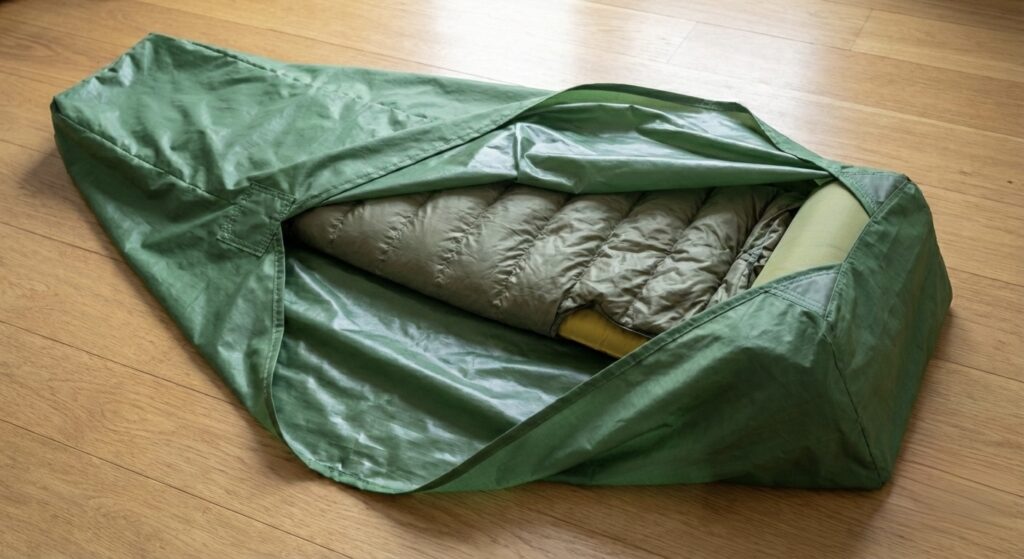
This is a homemade bivvy system I put together from sil nylon with help from my Mum!
The idea came about after sleeping in a bivvy inside my tent last year to add some extra warmth. It worked really well but my Gore-Tex bivvy is fairly substantial and difficult to justify bringing along in addition to the tent..
It adds another layer of protection around the sleeping system while remaining relatively lightweight and gives me a little more flexibility when camping.
It’s super lightweight and packs down incredibly small. Rather than simply covering me, it’s designed to fit around the entire sleep system. The idea is to create a smaller, more enclosed space around the sleeping system and cut out draughts on breezy nights.
The obvious downside is that it isn’t an off-the-shelf piece of kit I can recommend buying. It’s very much something I built around my own setup.
The good: Lightweight, simple and adaptable.
The downside: It’s homemade and designed to be used inside the tent rather than as a standalone bivvy outside.
Sleeping Mat – Therm-a-Rest NeoLoft
Probably the biggest comfort upgrade I’ve made this year.
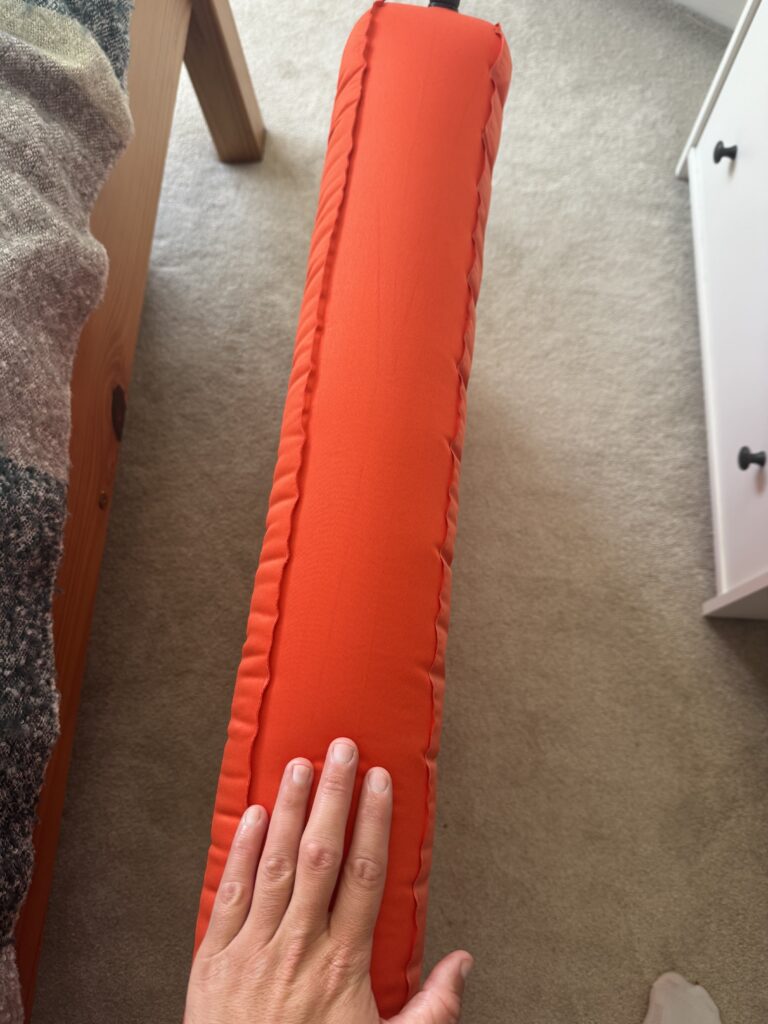
The NeoLoft is substantially thicker than many traditional lightweight sleeping mats, which makes a noticeable difference when sleeping on uneven ground.
I’m a side sleeper and with most sleeping mats I find myself turning over every hour or so to relieve the pressure on my hip. With the NeoLoft’s massive 11.7cm depth and R-value of 4.7, I found it comfortable almost immediately and finally got a genuinely good night’s sleep.
It’s not the lightest or smallest mat available, but this is exactly where I think sea kayaking gives you a bit more freedom. I’d rather carry the extra bulk and wake up feeling like I’ve actually slept.
The good: Extremely comfortable, warm and much more forgiving when camping on uneven ground. Particularly good for side sleepers.
The downside: Bigger and heavier than a minimalist sleeping mat.
Sleeping Bag Liner – Cocoon Merino Wool MummyLiner
The merino liner adds another layer of comfort and a little extra warmth while also helping keep the down quilt cleaner.
I’ve been using the Sea to Summit Reactor for years but found it wasn’t adding as much warmth as I wanted on cold nights. Switching to the Cocoon Merino Wool liner made a noticeable difference straight away.
On longer trips I like having something that can be taken out and washed without having to worry about washing the down quilt itself. Merino wool also has natural odour-resistant properties, so I find there’s no need to wash the liner frequently unless I’m on an extended trip.
The good: Comfortable, warm and helps manage moisture.
The downside: At around 500g, it’s a noticeable addition to the overall weight of the sleep system.
Down Quilt – Therm-a-Rest Vesper 0°C
I’ve been using a down quilt instead of a traditional sleeping bag for several years now and the Vesper 0°C has become a key part of my current setup.
The big advantage for me is flexibility. On warmer nights it can be opened up and used more like a blanket, while in colder conditions it can be tucked around the body to retain warmth.
Combined with the NeoLoft, it makes a very comfortable sleeping system.
The main compromise with a quilt is that it requires a little more attention in colder conditions. Unlike a conventional sleeping bag, there isn’t a full hood and zip enclosing you, so it’s important to minimise draughts and make sure the quilt is properly positioned.
For sea kayaking, I’m happy with that trade-off.
The good: Warm, comfortable, flexible across a range of temperatures and very packable. The hydrophobic down has also worked well for me while sea kayaking. I’ve had no issues with dampness in my own use and the quilt packs down incredibly small.
The downside: Less forgiving than a conventional sleeping bag when conditions get properly cold, particularly if you struggle to keep draughts out.
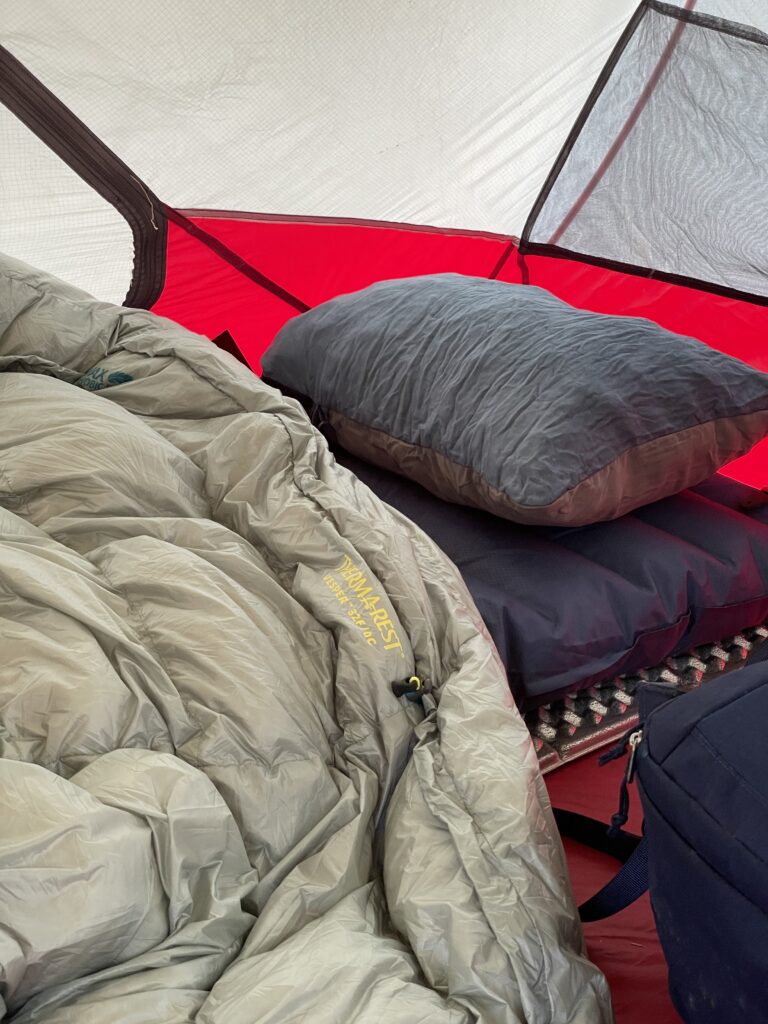
Pillow – Sea to Summit Aeros Premium Pillow
Another small luxury that makes a surprisingly big difference.
Having a proper pillow is one of those upgrades that I now wouldn’t want to leave behind.
The Aeros Premium packs down small but provides enough height and support to make sleeping much more comfortable.
One tip I’ve found useful is working out how much air you actually need. I inflate it fully first, then slowly release air until it feels comfortable. It’s easy to adjust using the quick-release valve, and a little experimentation makes a big difference to the support you get.
The good: Small packed size, adjustable firmness and much more comfortable than improvising with spare clothing.
The downside: It’s another inflatable item to potentially puncture!
The Small Things
And finally don’t forget the things that weigh almost nothing but can make a huge difference:
Earplugs and a eye mask.
A windy night can make a tent surprisingly noisy, while summer nights in northern latitudes can still be light when you’re trying to sleep.
You can spend a lot of money upgrading your sleeping system, but sometimes a pair of earplugs and an eye mask are the most effective additions of all.
Is it overkill?
Probably, if your priority is carrying the absolute minimum.
But for sea kayak expeditions I think there’s a good argument for spending some of your available weight and space on comfort.
After a long day on the water, a good night’s sleep isn’t really a luxury. It’s part of being ready for the next day.
My current setup certainly isn’t the lightest possible but it’s comfortable, warm and reliable. That’s becoming a much higher priority for me when packing for an expedition or guiding.